If you are struggling with a cramped sleeping area, don’t worry because I have gathered the best Tiny Bedroom Ideas to Make Your Space Feel Massive. Small rooms often feel claustrophobic, but with the right design choices, you can turn even the smallest nook into a luxurious and airy retreat that you actually enjoy spending time in.
From utilizing vertical space to choosing the perfect color palette, these transformations show that square footage doesn’t limit style. We will explore how to use mirrors, multi-functional furniture, and clever lighting to trick the eye into seeing a much larger room. Let’s dive into these practical and beautiful solutions for your small home.
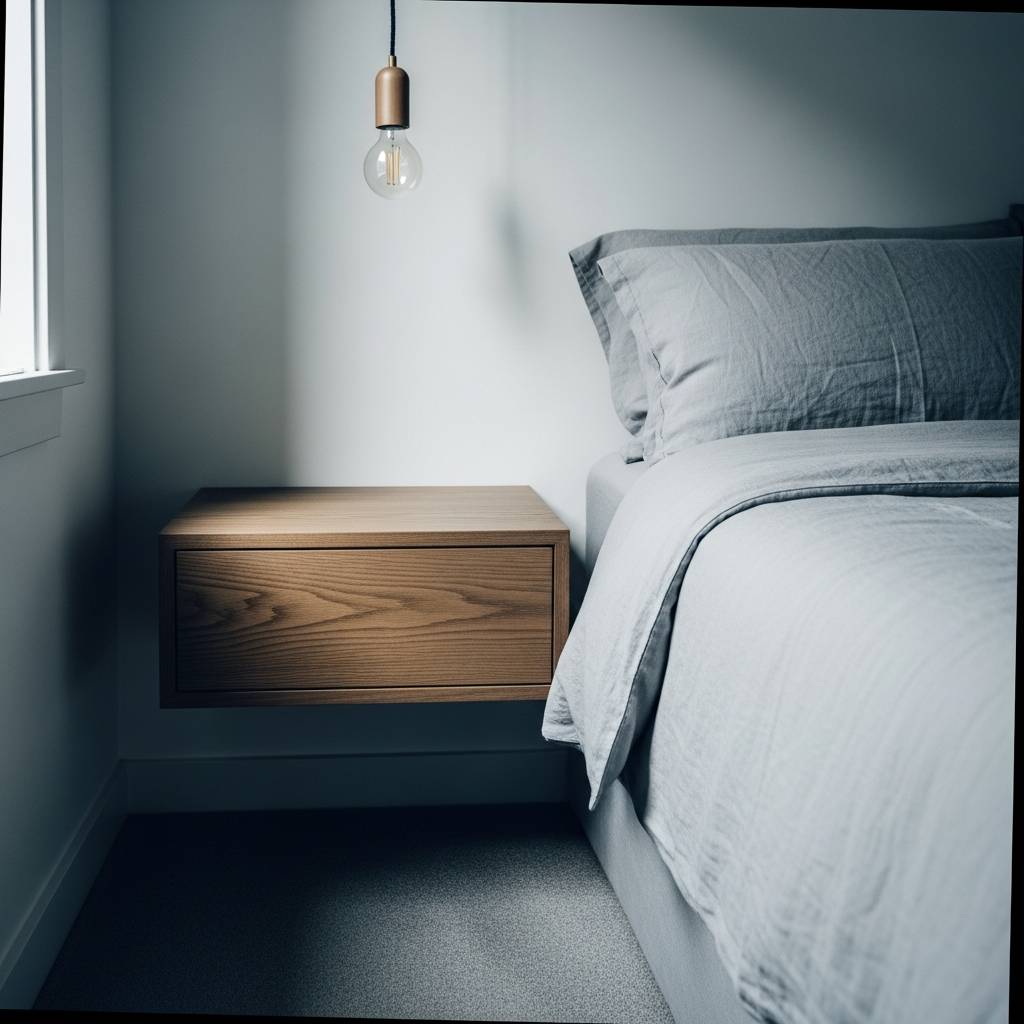
1. Floating Nightstands for Visual Floor Space
One of the easiest ways to make a tiny bedroom feel less cluttered is to keep the floor as clear as possible. Floating nightstands are perfect for this because they attach directly to the wall, leaving the space underneath open. This simple trick allows your eyes to travel across the floor, creating the illusion of more square footage. You can choose a sleek wooden shelf or a small drawer unit to hold your essentials like a phone, book, or glass of water without the bulk of a traditional bedside table.
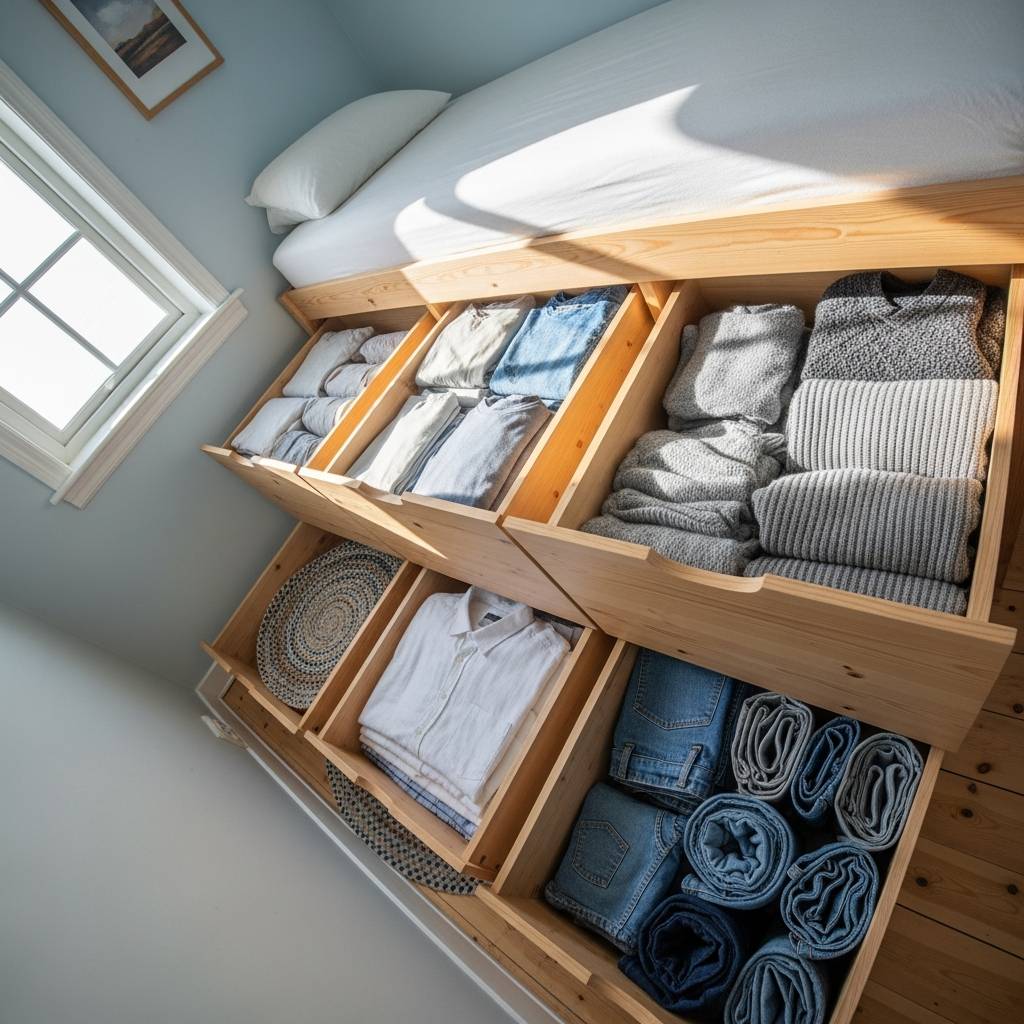
2. Utilize the Space Under Your Bed
In a tiny room, the area under your bed is prime real estate for storage. Instead of letting dust bunnies collect, invest in a bed frame with built-in drawers or use stylish storage bins that slide underneath. This is the perfect spot for seasonal clothing, extra linens, or shoes that you don’t wear daily. By hiding these items away, you remove the need for an extra dresser, which can take up valuable floor space and make the room feel much more open and organized.
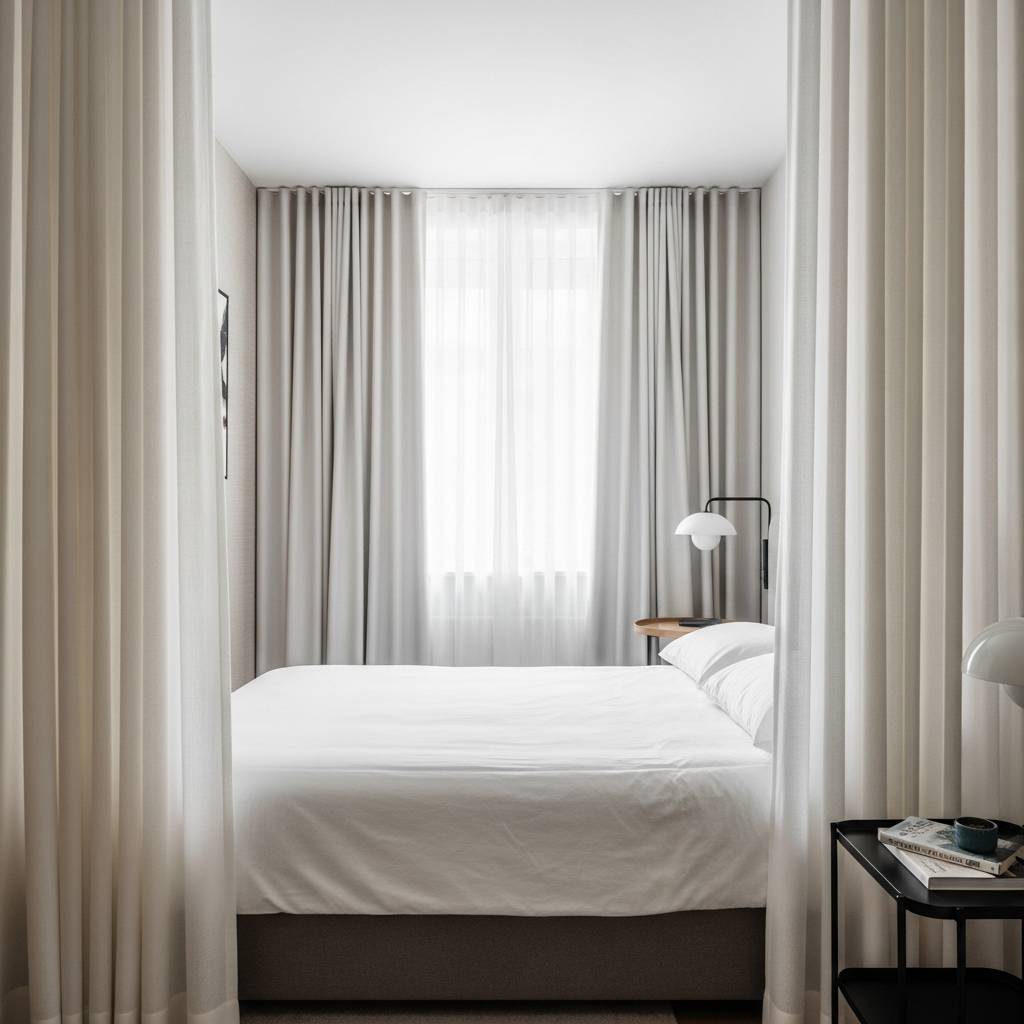
3. Hang Floor-to-Ceiling Curtains
To make your ceilings feel much higher than they actually are, hang your curtain rod just a few inches below the ceiling rather than right at the window frame. Let the fabric flow all the way down to the floor. This vertical line draws the eye upward and creates a sense of grandeur in a small space. Choose light-colored, semi-sheer fabrics to allow natural light to filter through while still providing privacy, which helps maintain a bright and airy atmosphere.
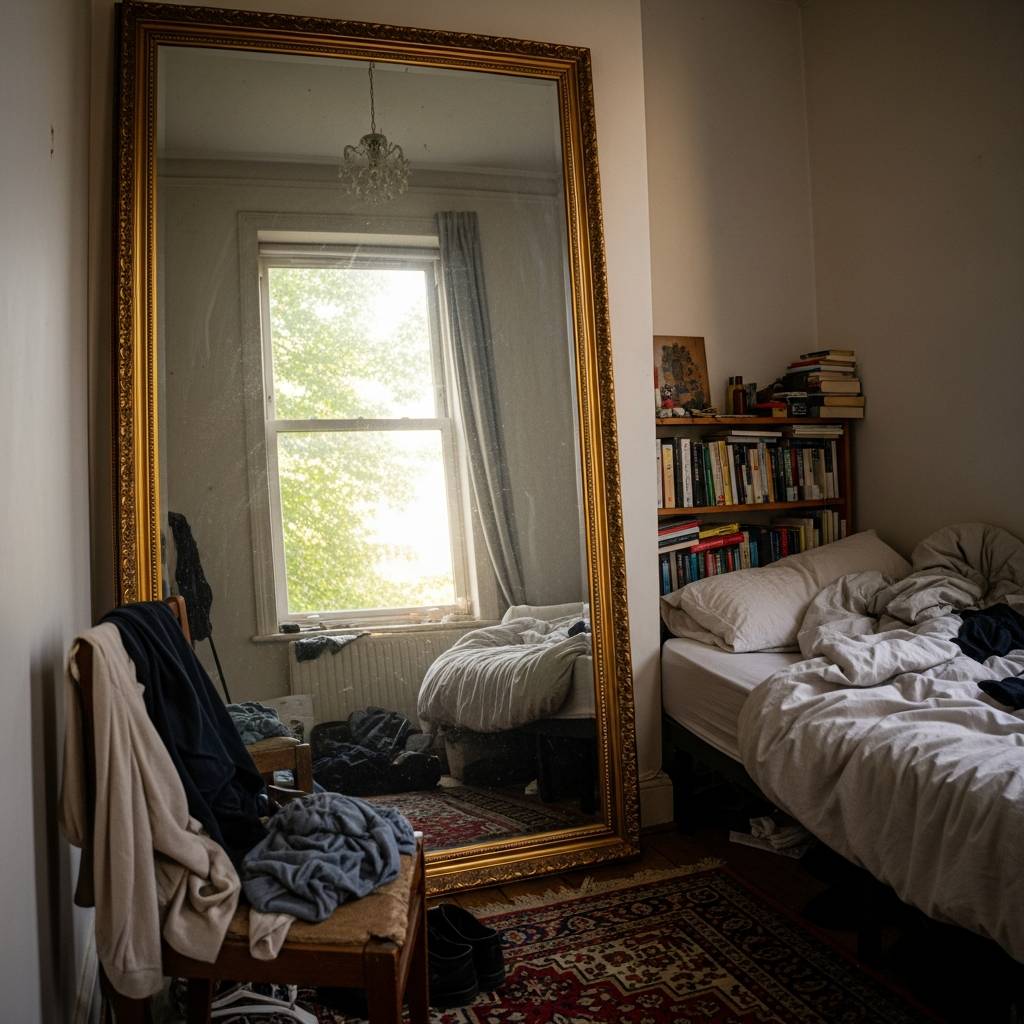
4. Incorporate Large Scale Mirrors
Mirrors are the oldest trick in the book for a reason; they truly work wonders in small spaces. A large floor-length mirror or a wall-mounted mirror positioned opposite a window will reflect natural light and the view of the room, effectively doubling the visual space. This makes the bedroom feel deeper and brighter instantly. For a modern look, try a round mirror or a sleek black-framed leaning mirror to add style without overwhelming the small area.
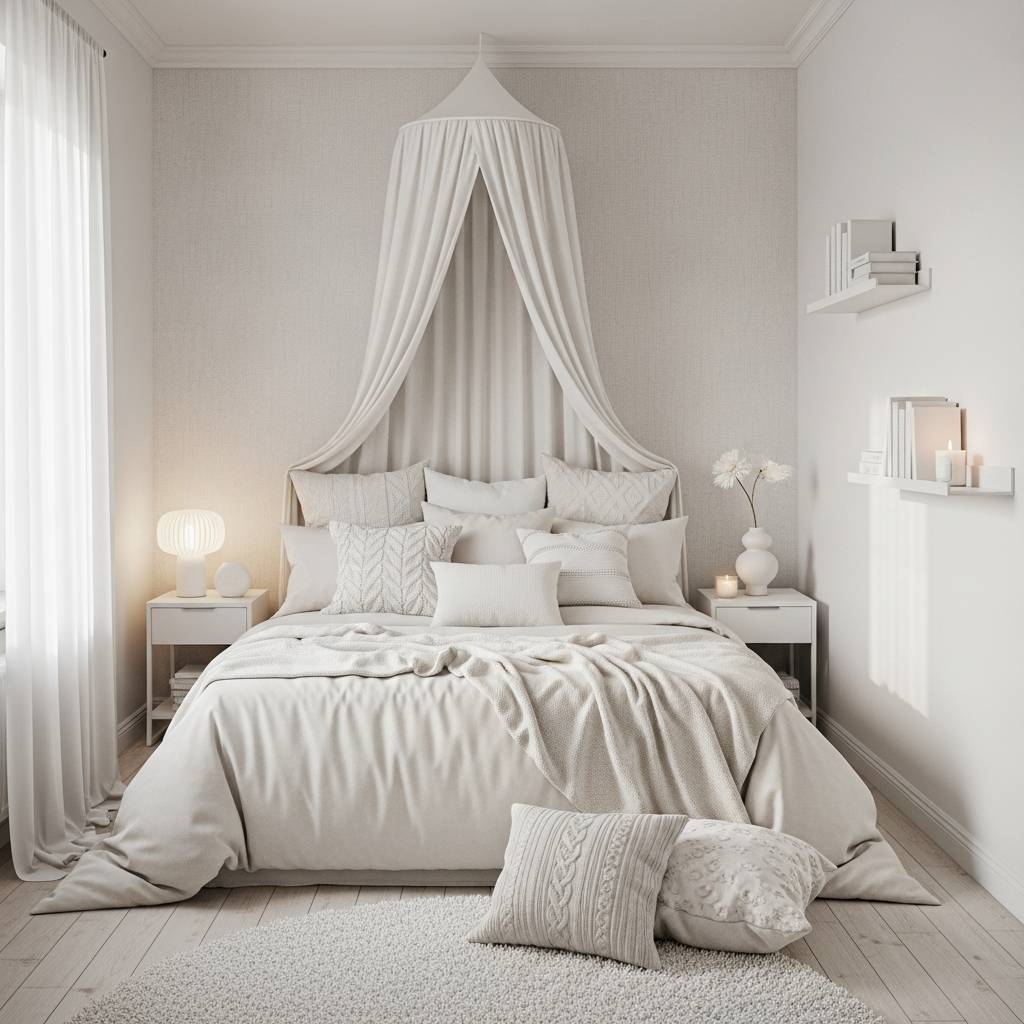
5. Choose a Light and Airy Color Palette
Dark colors tend to absorb light and can make a small room feel like a cave. To prevent this, stick to a light and neutral color palette featuring whites, creams, soft grays, or very pale pastels. These shades reflect light and make the walls feel like they are receding. If you want to add color, do so through textures and small accents like throw pillows or a cozy rug, keeping the main surfaces bright to maximize the feeling of openness.
6. Invest in Multi-functional Furniture
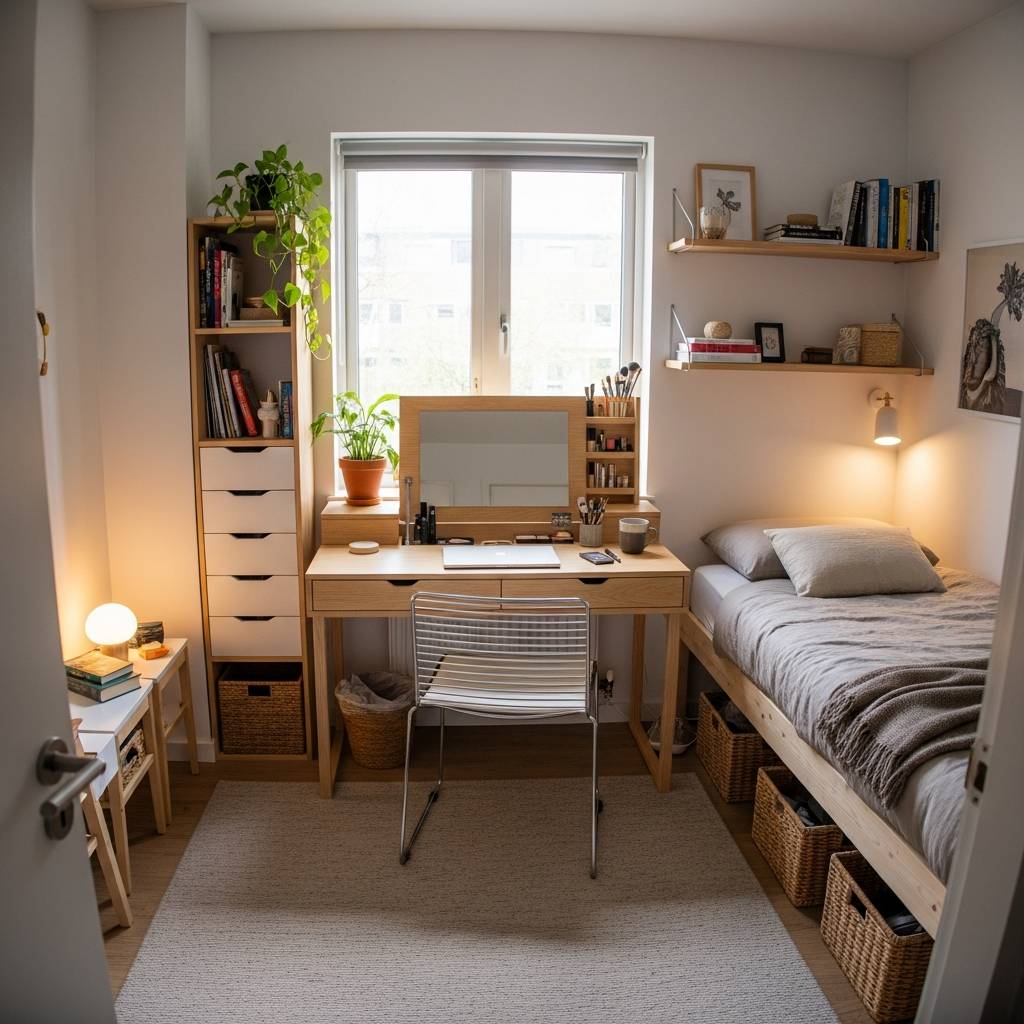
In a small bedroom, every piece of furniture should earn its keep. Look for multi-functional items like a bed with a headboard that doubles as a bookshelf, or a small desk that can also serve as a vanity. A storage ottoman at the foot of the bed can provide seating while hiding away extra blankets. By reducing the number of individual pieces in the room, you create a more streamlined and less cluttered environment that feels surprisingly roomy.
7. Go Vertical with Wall Shelving
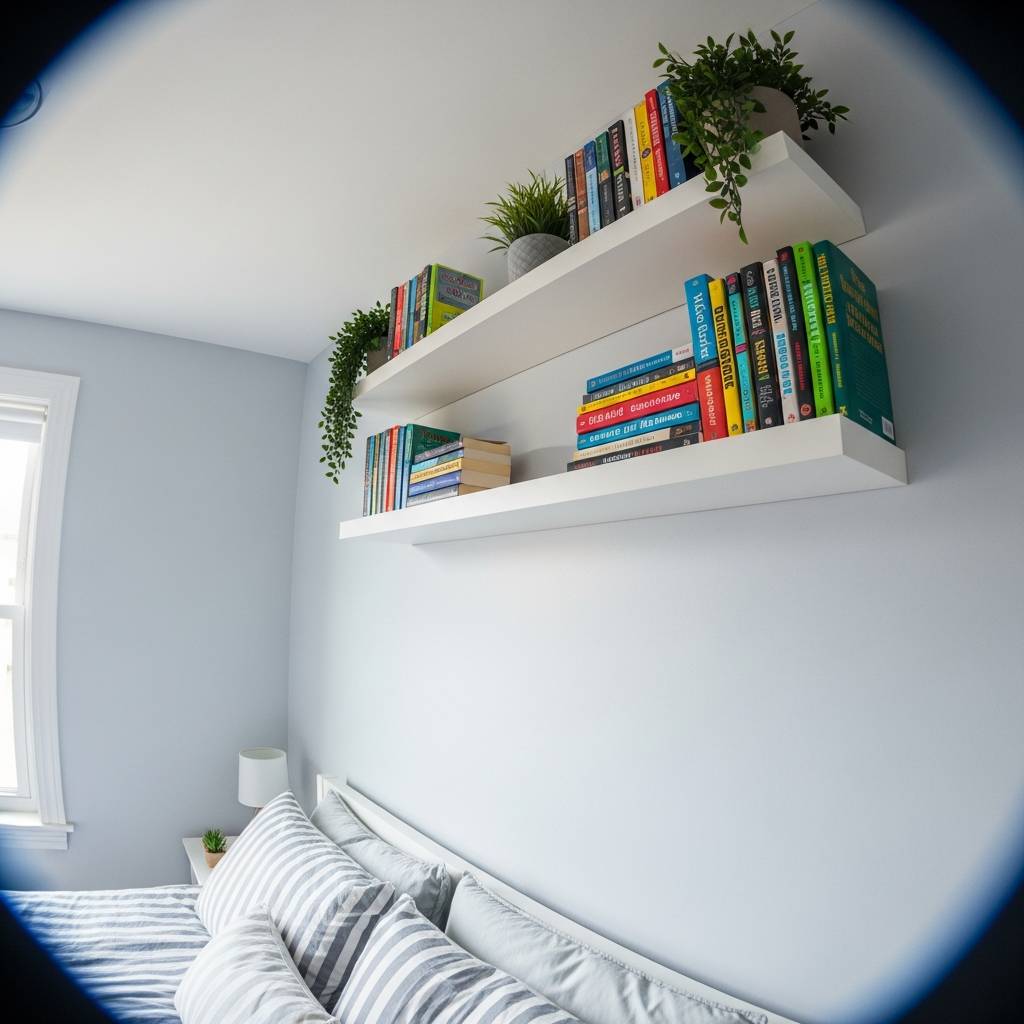
When you run out of floor space, look up. Installing floating shelves high on the walls allows you to display books, plants, and decor without taking up any footprint. Use the top few feet of the walls for items you don’t need to reach every day. This keeps your surfaces clear and adds visual interest to the room. Just be sure to keep the styling curated and tidy to avoid making the walls feel heavy or cluttered.
8. Swap Table Lamps for Wall Sconces
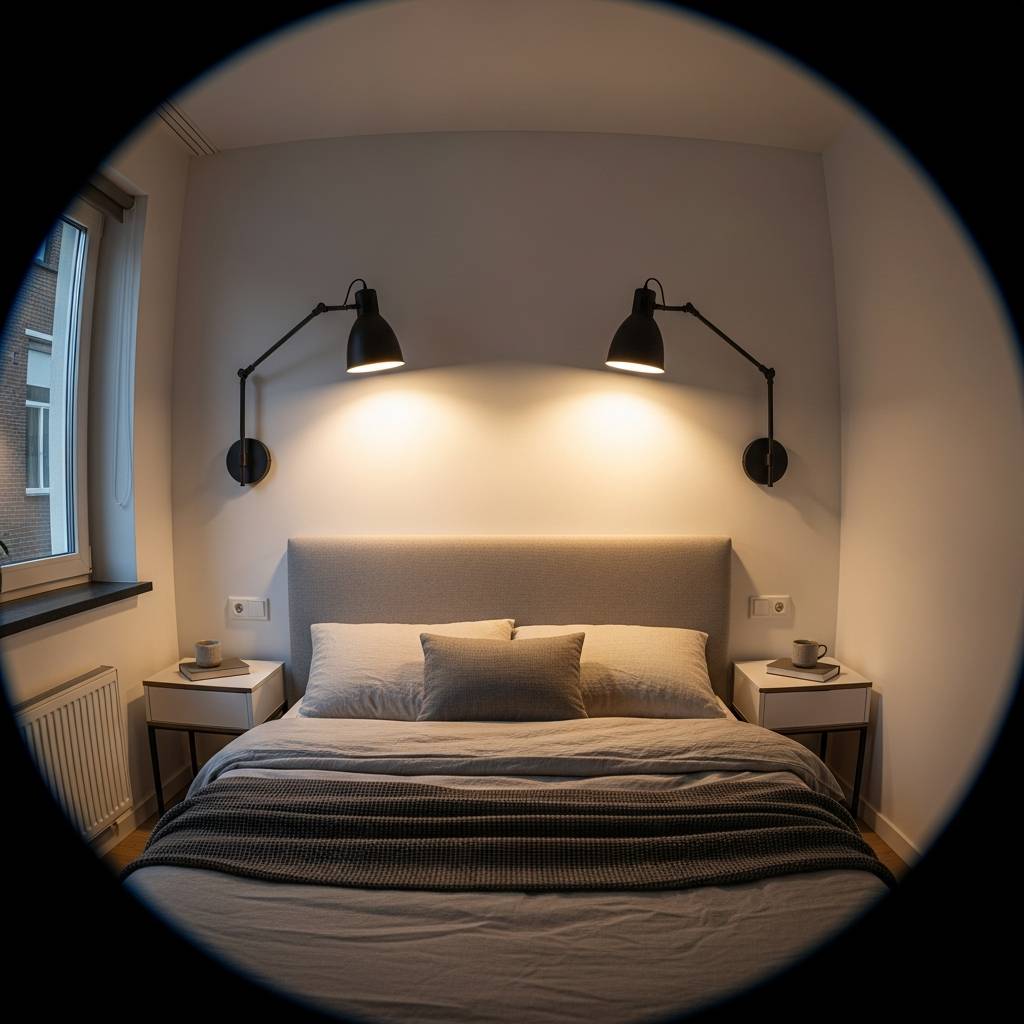
Table lamps require surface area on your nightstand, which is often limited in tiny bedrooms. Swapping them for wall-mounted sconces is a game-changer. Sconces provide excellent task lighting for reading in bed while freeing up the entire top of your bedside table. Choose adjustable swing-arm sconces for maximum flexibility and a modern, high-end look that feels intentional and well-designed for the space.
9. Opt for a Low Profile Bed Frame
A high bed can dominate a small room and make the ceiling feel lower. Choosing a low-profile platform bed frame sits closer to the ground and leaves more open space above it, which creates a feeling of height and airiness. This minimalist approach works particularly well in attic bedrooms or rooms with low ceilings, making the entire layout feel more balanced and less cramped.
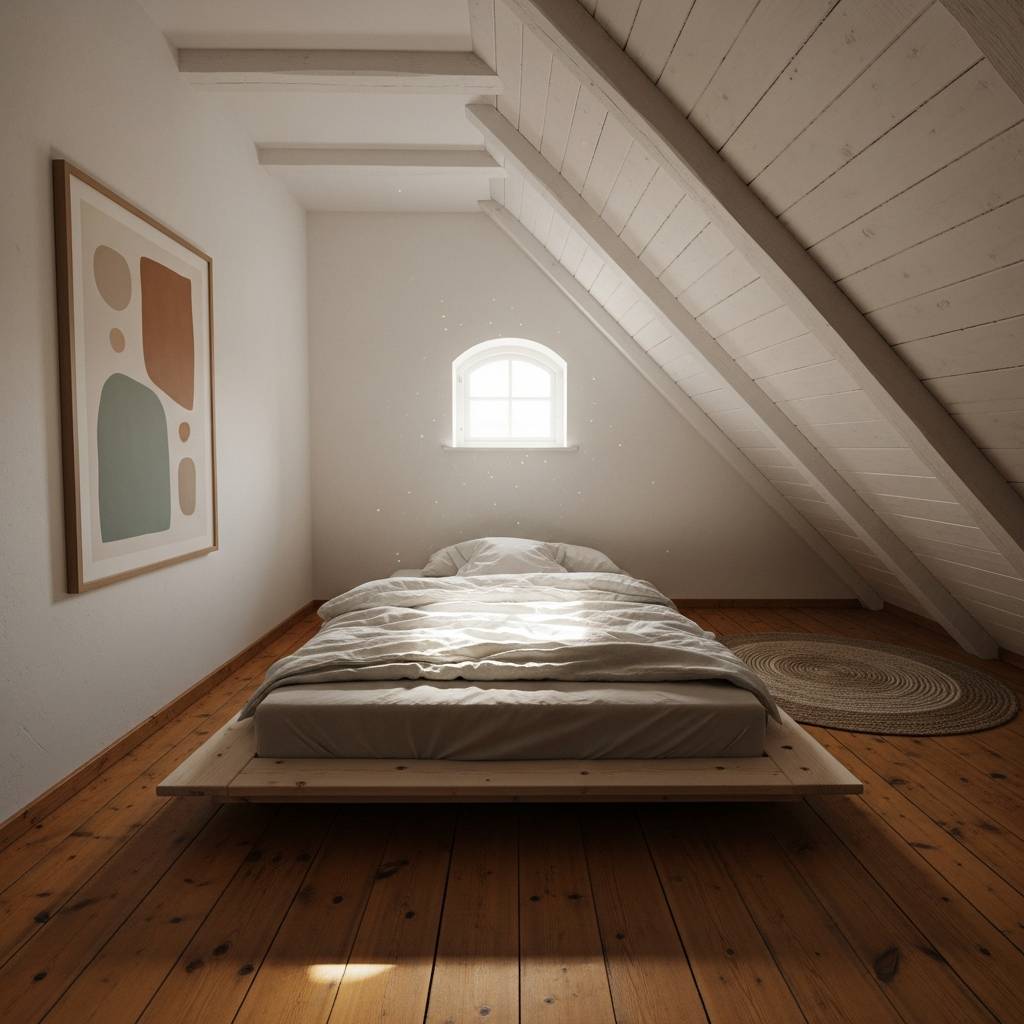
10. Install Sliding Barn Doors
Traditional doors that swing inward can waste a lot of floor space in a tiny bedroom. If your layout allows, consider replacing your bedroom or closet door with a sliding barn door or a pocket door. This eliminates the ‘swing zone,’ allowing you to place furniture closer to the doorway without any obstruction. It also adds a unique architectural element to the room that looks stylish and saves a significant amount of usable area.
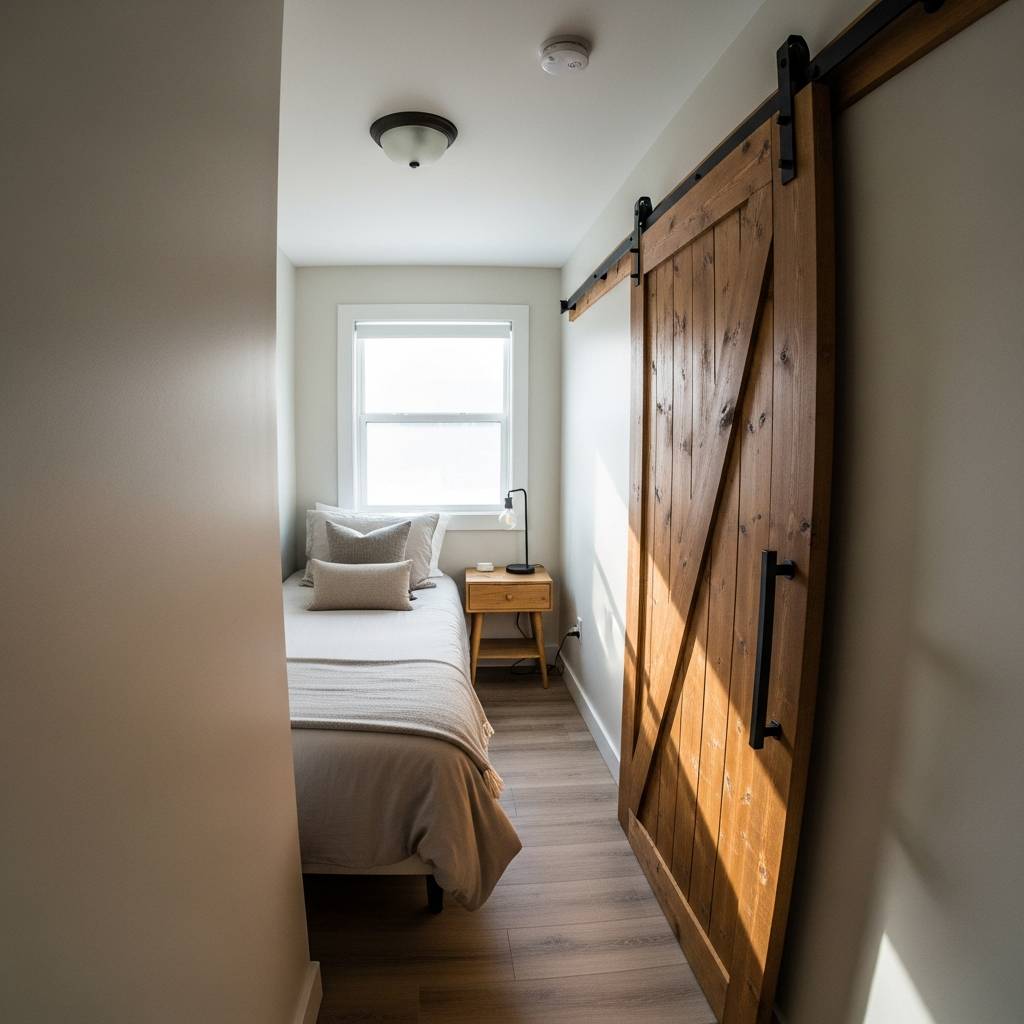
11. Use Transparent Acrylic Furniture
Transparent or ‘ghost’ furniture is an amazing tool for small spaces. An acrylic chair or a clear side table provides the function you need without taking up any visual weight. Because you can see right through it, the piece practically disappears into the room, making the layout feel much less crowded. It’s a chic, modern solution that keeps the energy of the room flowing and light.
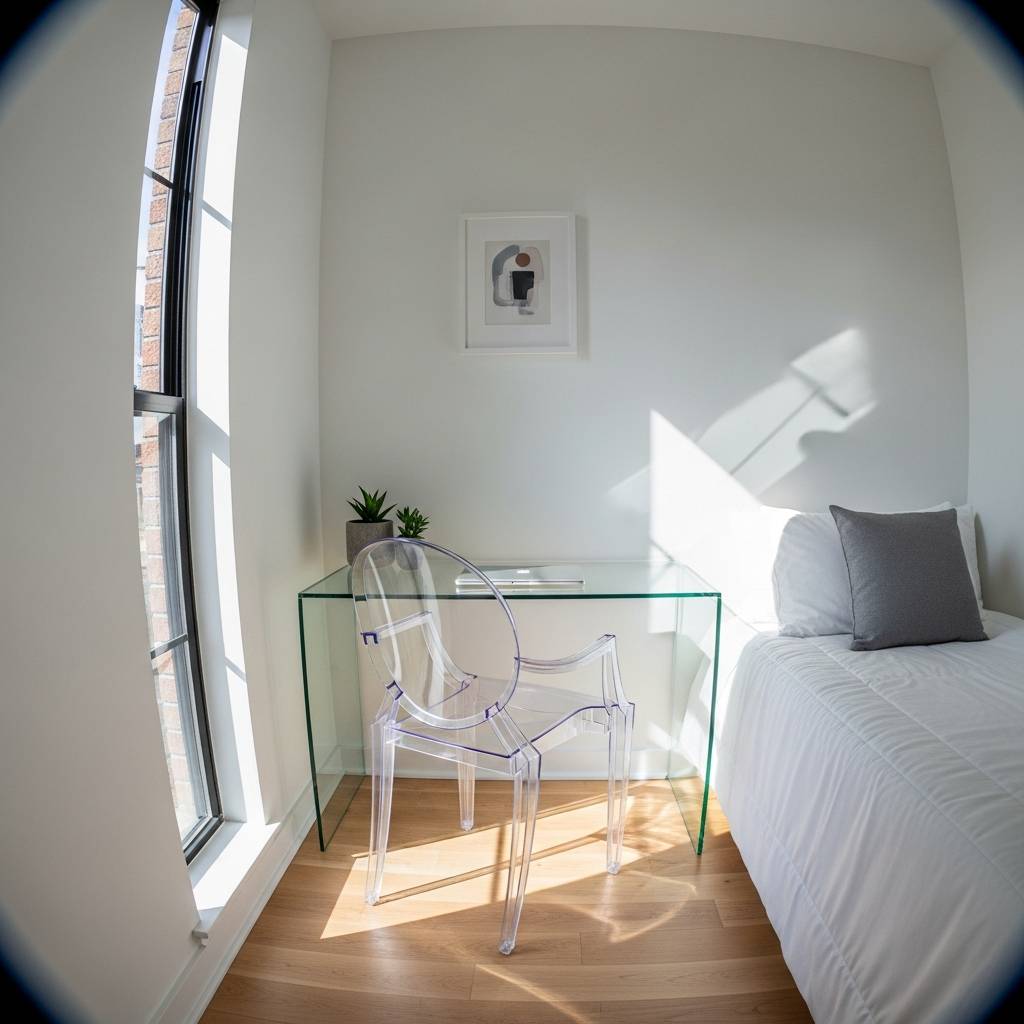
12. Create a Focal Point with an Accent Wall
While light colors are generally better, a dark or patterned accent wall behind the bed can actually create a sense of depth. By drawing the eye to the furthest wall, you create a focal point that makes the room feel longer or wider depending on where it is placed. Use a deep navy, a forest green, or even a subtle textured wallpaper to add character without closing in the rest of the space.
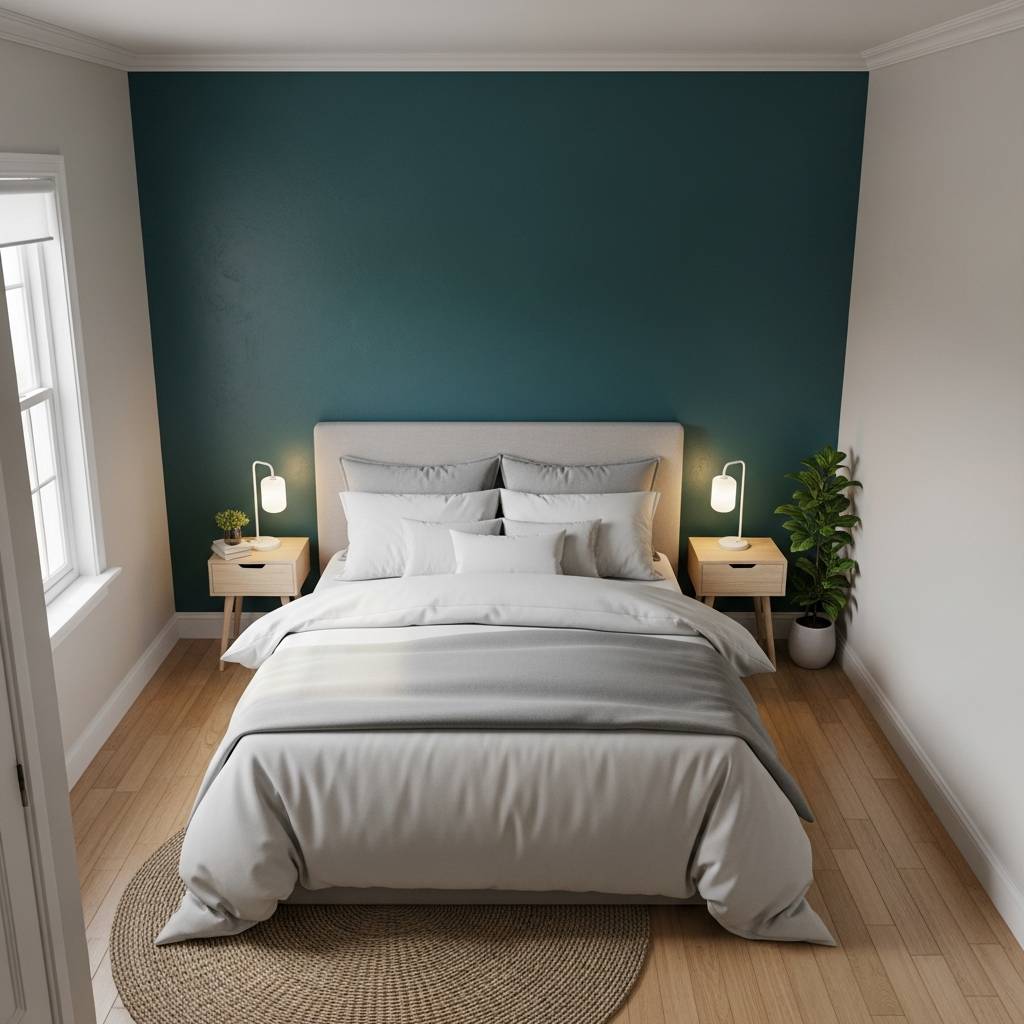
13. Declutter with a Minimalist Approach
In a tiny bedroom, clutter is your worst enemy. Adopting a minimalist lifestyle where you only keep what you truly need and love will make the biggest difference. Regularly clear off surfaces, organize your closets, and ensure everything has a designated home. A clean, tidy room always feels larger than a cluttered one, no matter the actual size of the footprint. Focus on quality over quantity for your decor.
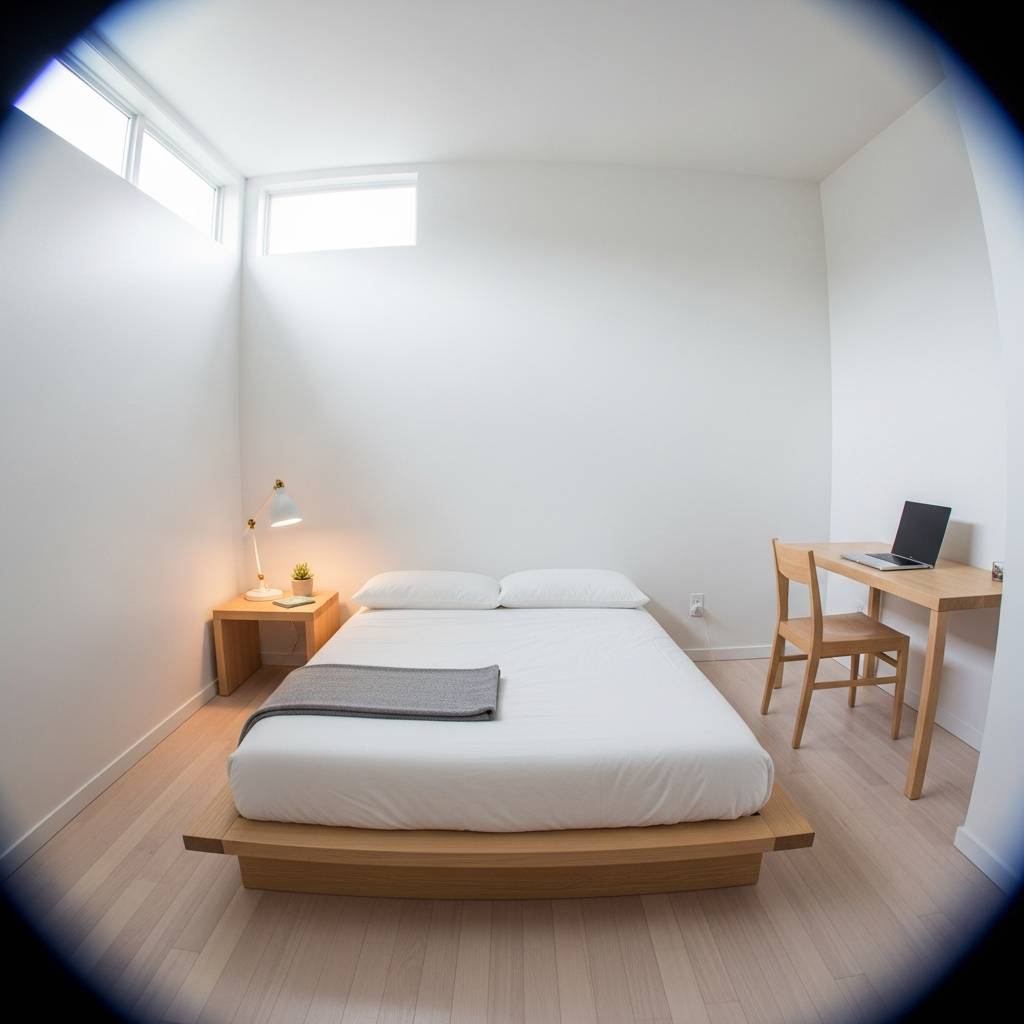
14. Integrate Built-in Wardrobes
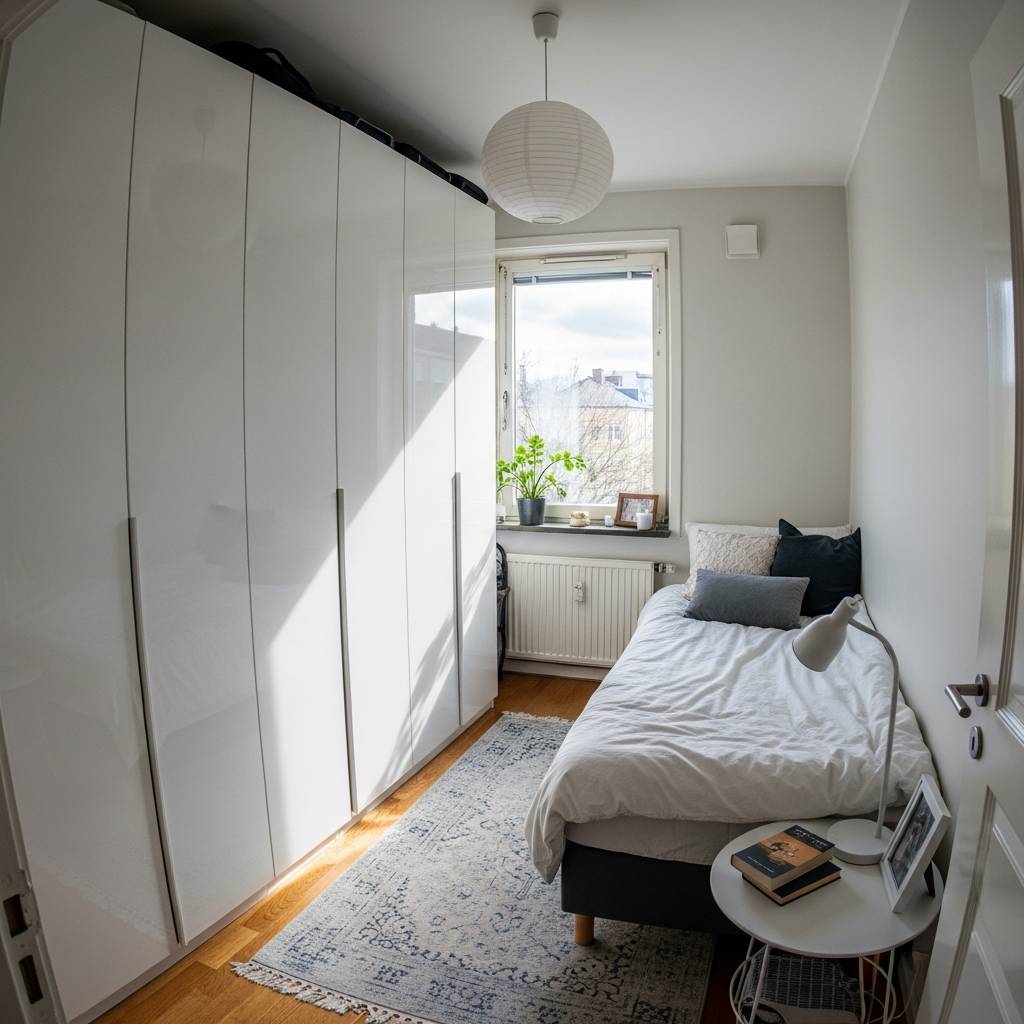
If you have the budget, floor-to-ceiling built-in wardrobes can be a lifesaver. They utilize every inch of wall space and can be designed to blend seamlessly with the walls. When painted the same color as the room, they ‘disappear’ and provide a massive amount of storage for clothes, luggage, and linens. This eliminates the need for bulky, mismatched dressers that break up the flow of the room.
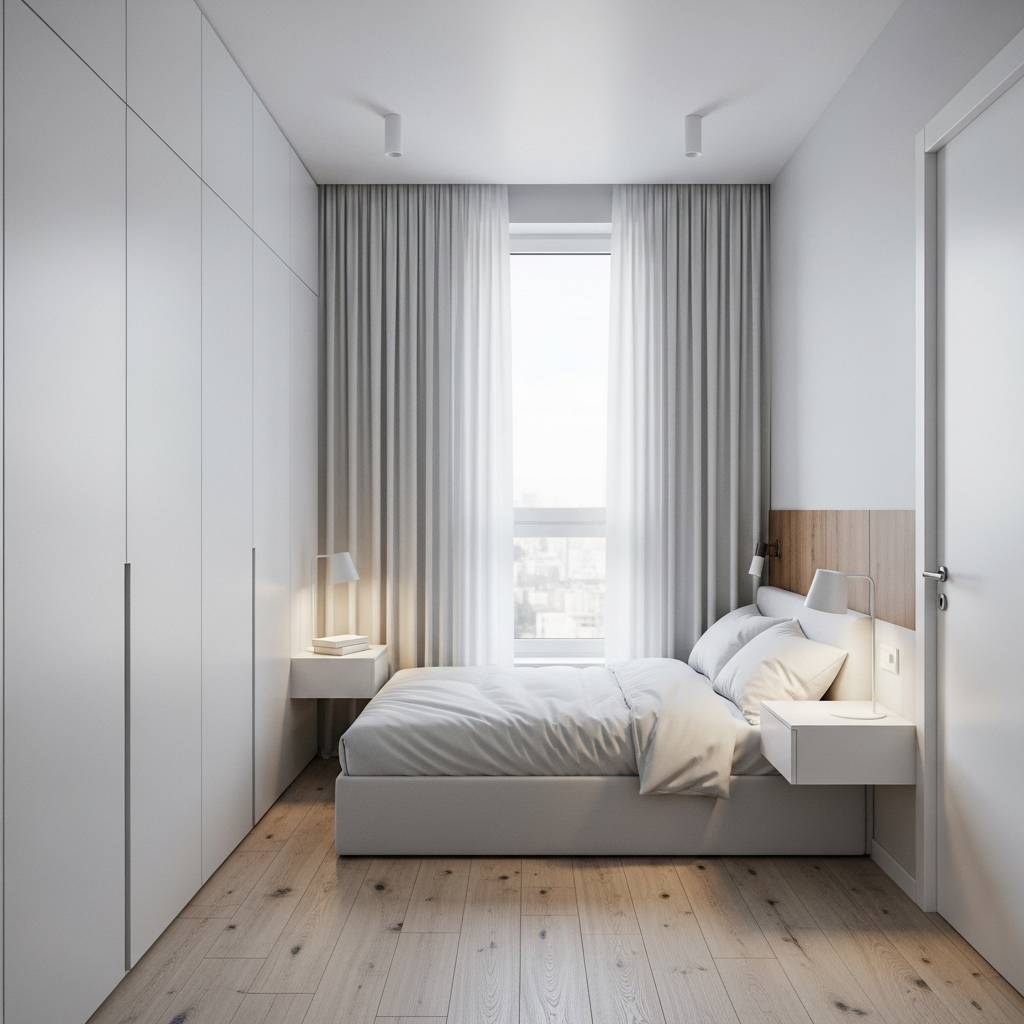
15. Loft the Bed for Extra Living Space
For ultra-tiny rooms or studio apartments, lofting the bed is the ultimate space-saver. By raising the sleeping area, you free up the entire floor underneath for a desk, a cozy seating nook, or even a walk-in closet. This essentially doubles your usable square footage. Use a sturdy ladder or stairs with built-in storage to access the bed, creating a cool and functional multi-level living experience.
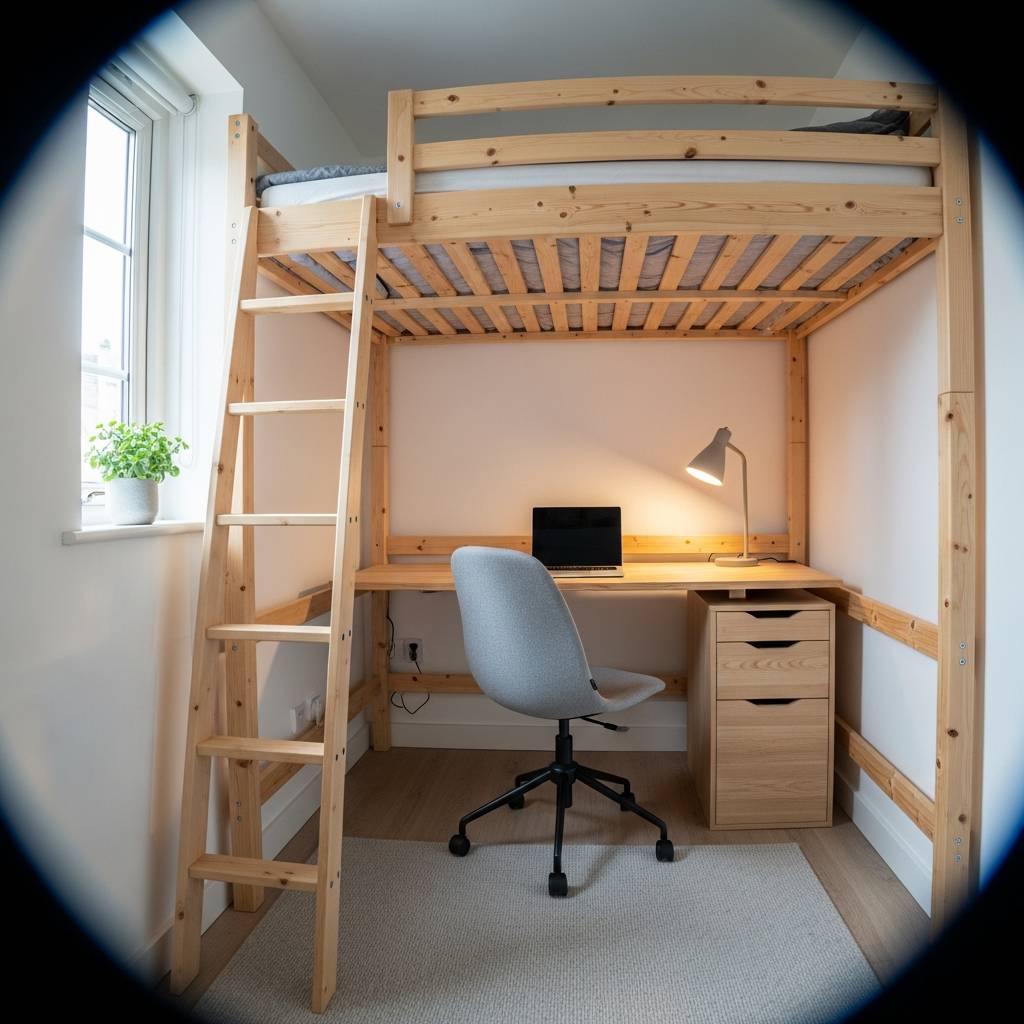
16. Keep Your Bedding Simple and Taut
Fluffy, oversized duvets can make a small bed look like it is swallowing the room. Instead, opt for thinner quilts or coverlets and tuck them in tightly for a crisp, clean look. Using light-colored linens with subtle textures rather than loud patterns will keep the bed looking proportional to the room. This tailored approach makes the space feel organized and more expansive.
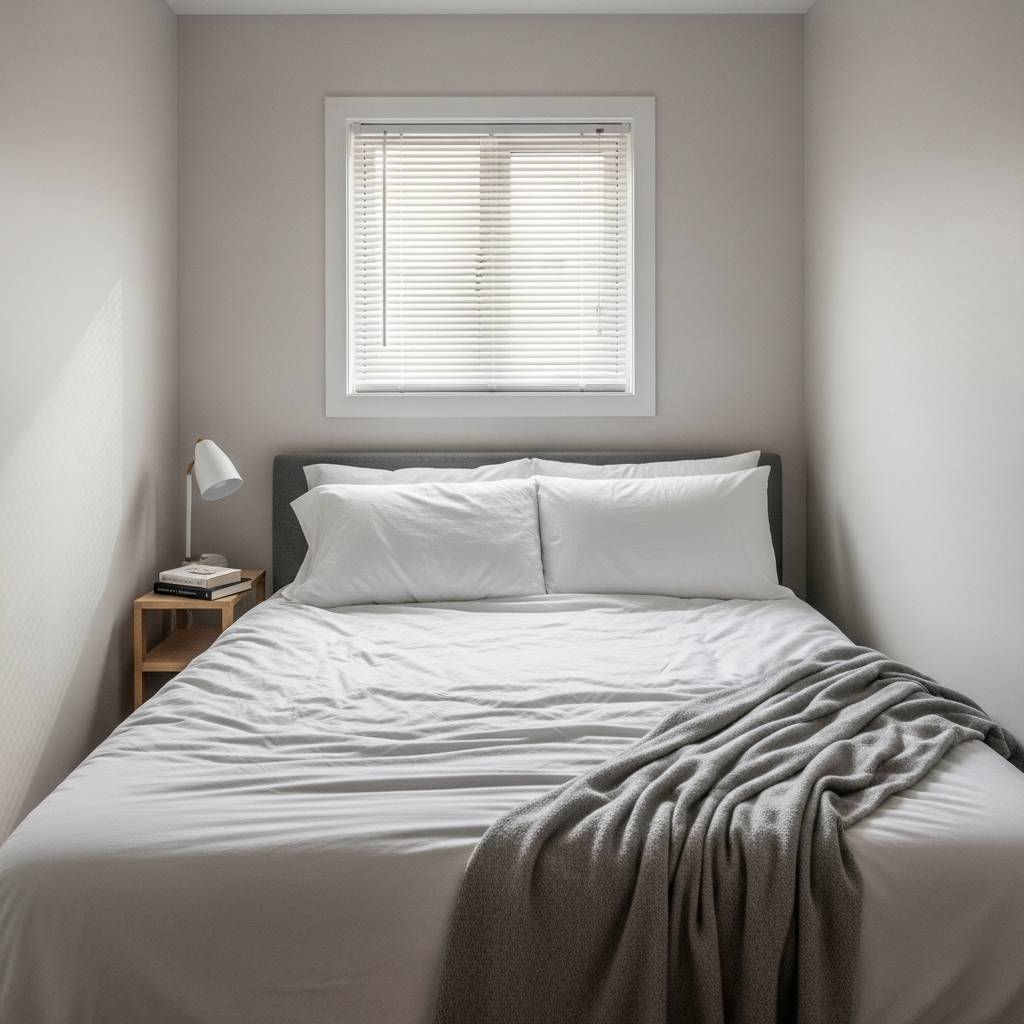
17. Utilize Corner Shelving Units
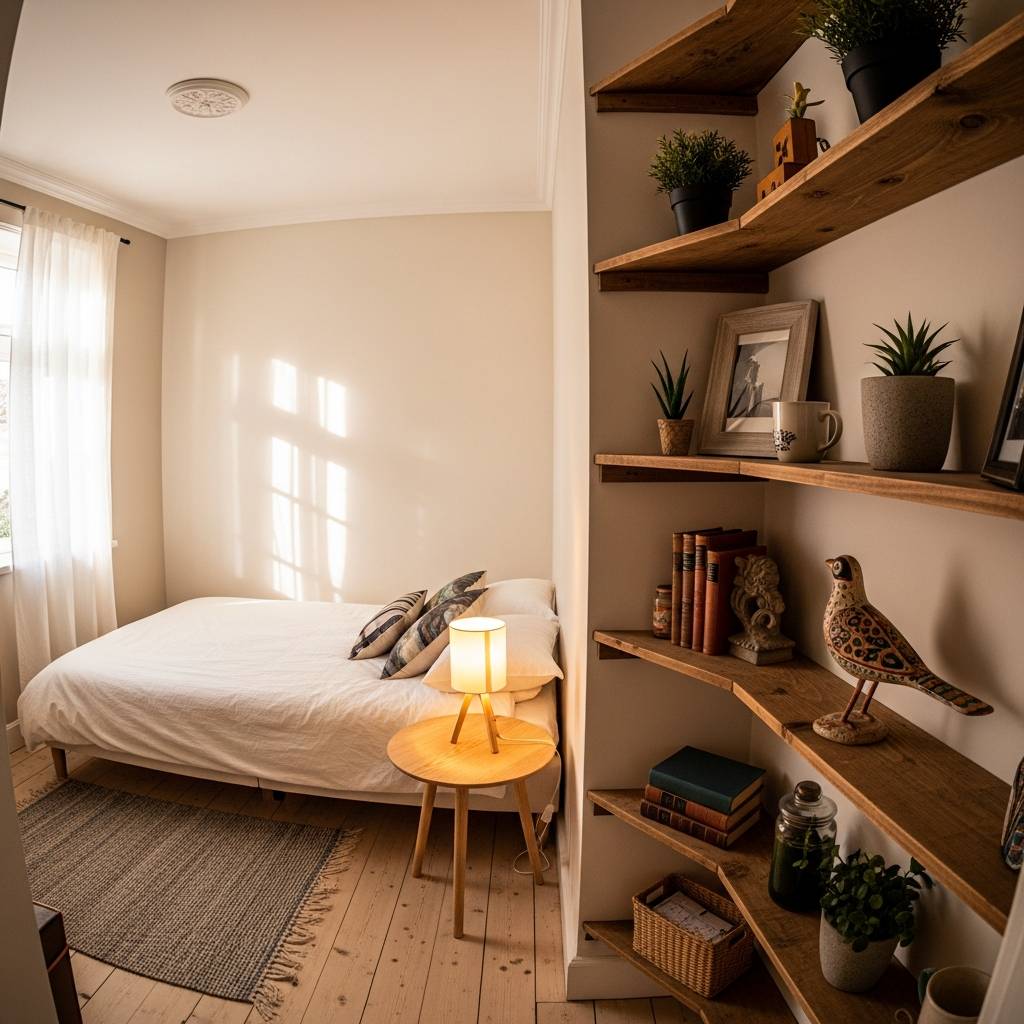
Corners are often neglected in bedroom design, but in a small space, they are valuable. Corner shelving units can hold books, plants, or decorative items without jutting out into the walking paths of the room. This makes use of awkward angles and adds a layer of functionality to the space that would otherwise be wasted. It’s a great way to display personality in a cramped environment.
18. Use Large Art to Expand the Walls
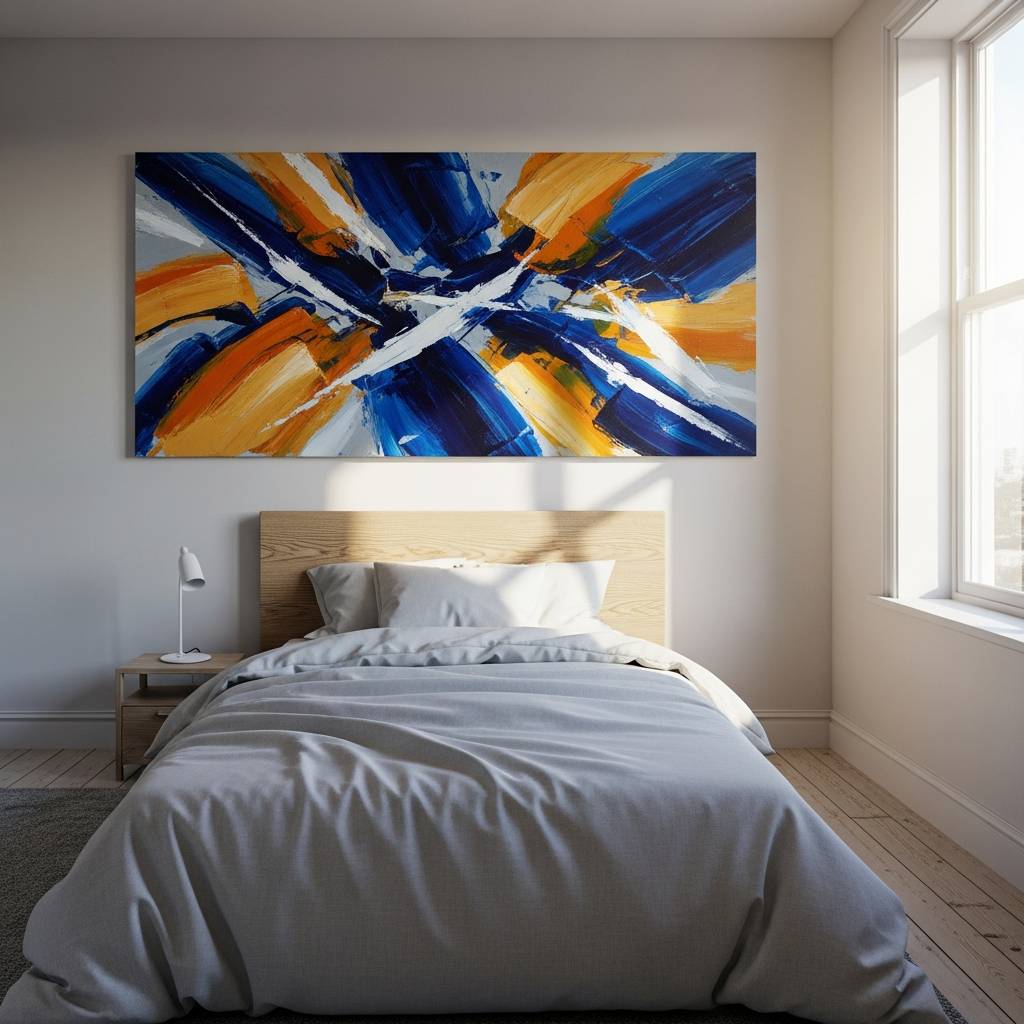
Instead of a gallery wall with many small frames, which can feel busy and cluttered, choose one large piece of art to hang above the bed. A large-scale landscape or abstract piece creates a sense of scale and pushes the boundaries of the walls outward. It gives the room a sophisticated feel and acts as a window to another world, effectively making the room feel less enclosed.
19. Maximize Natural Light with Minimal Treatments
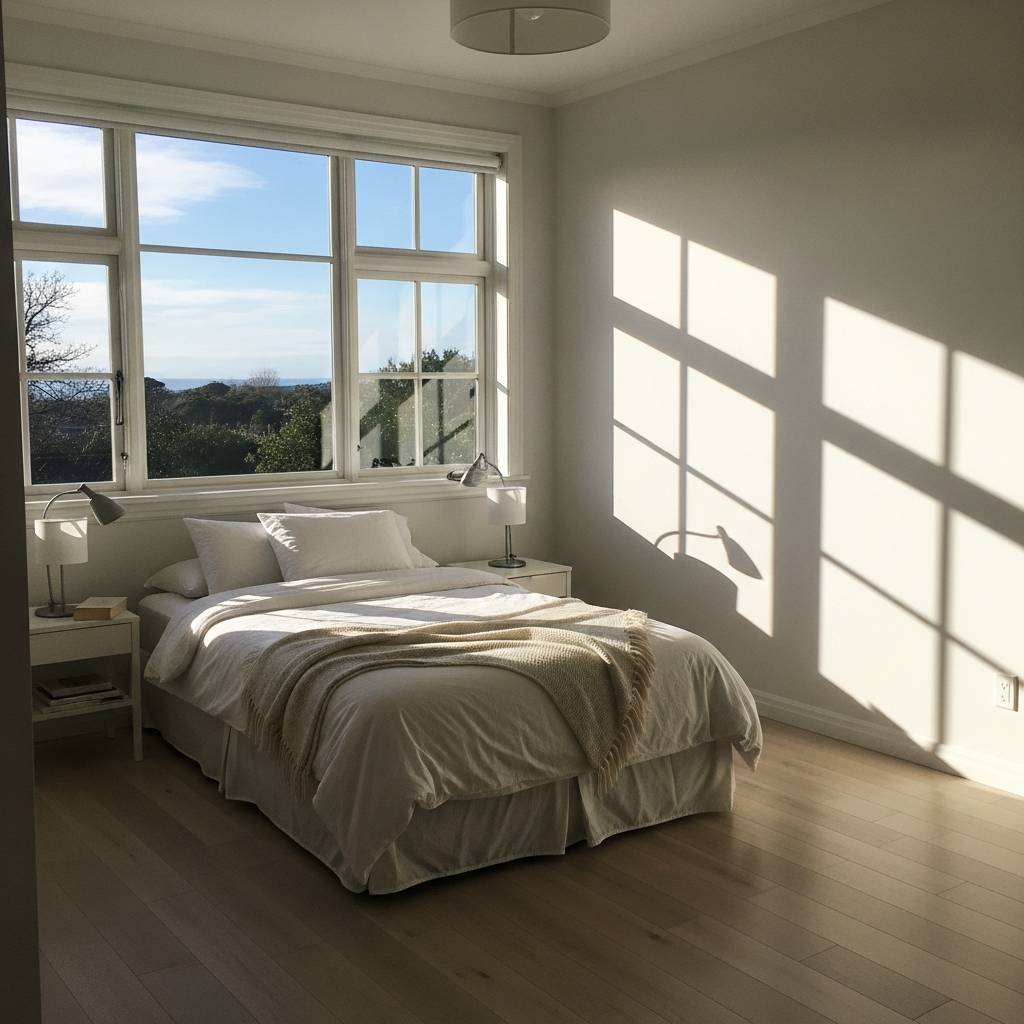
Natural light is the best friend of a small room. Keep your windows as clear as possible. If privacy isn’t a major concern, consider skipping heavy curtains altogether or using light-filtering roller shades that can be completely tucked away during the day. The more light you can get into the room, the more open and ‘massive’ it will feel to anyone who enters.
20. Add Plants for Life and Airiness
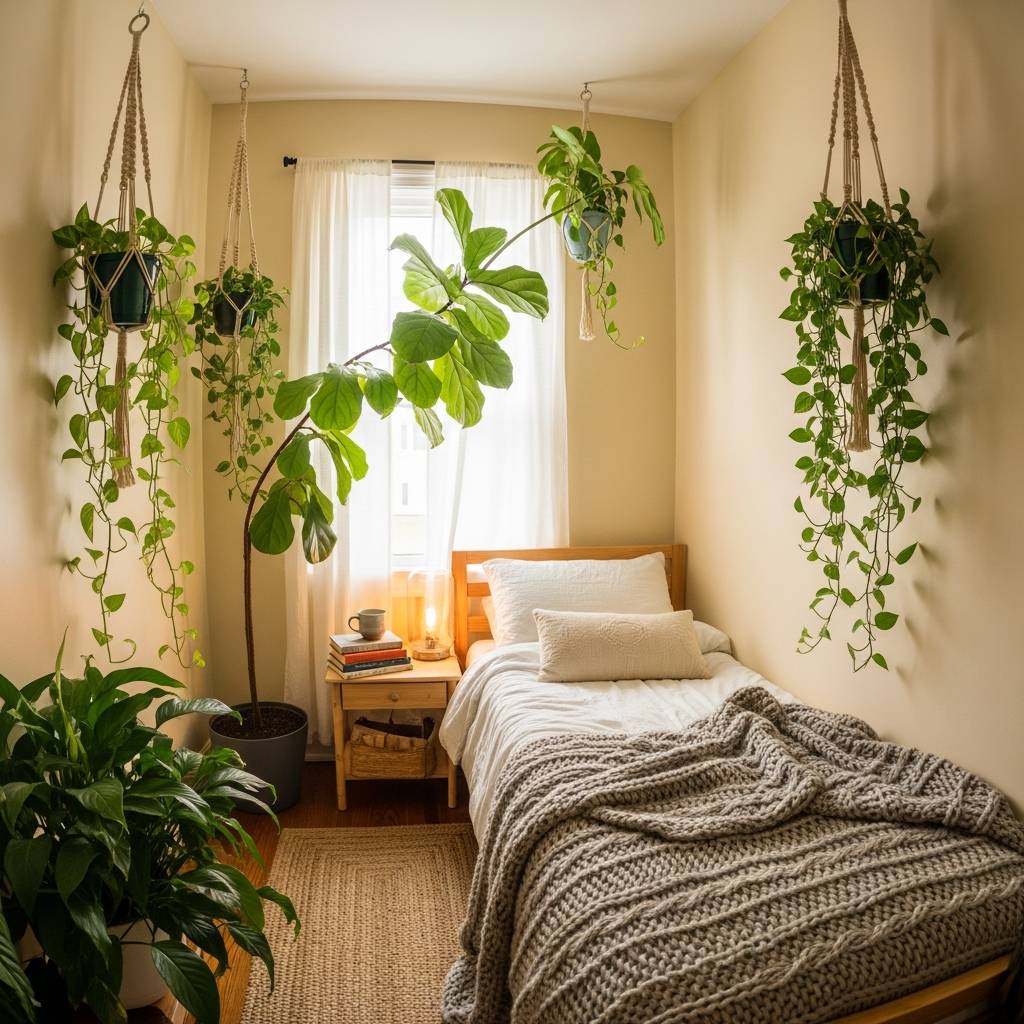
Plants add life and a sense of freshness that can make a tiny room feel less stifling. Use hanging planters or tall, thin plants like a snake plant to add greenery without taking up much floor space. The organic shapes of the leaves break up the harsh lines of the room and create a more relaxing, open atmosphere. Plants also help purify the air, which is a bonus in a small sleeping area.
21. Use Uniform Flooring Throughout
If your bedroom is part of a small apartment, using the same flooring in the bedroom as in the hallway or living area creates a seamless transition. This lack of visual breaks makes the entire home feel like one continuous, larger space. Avoid using small rugs that cut up the floor; instead, choose a large rug that tucks under the furniture to ground the room and provide a sense of continuity.
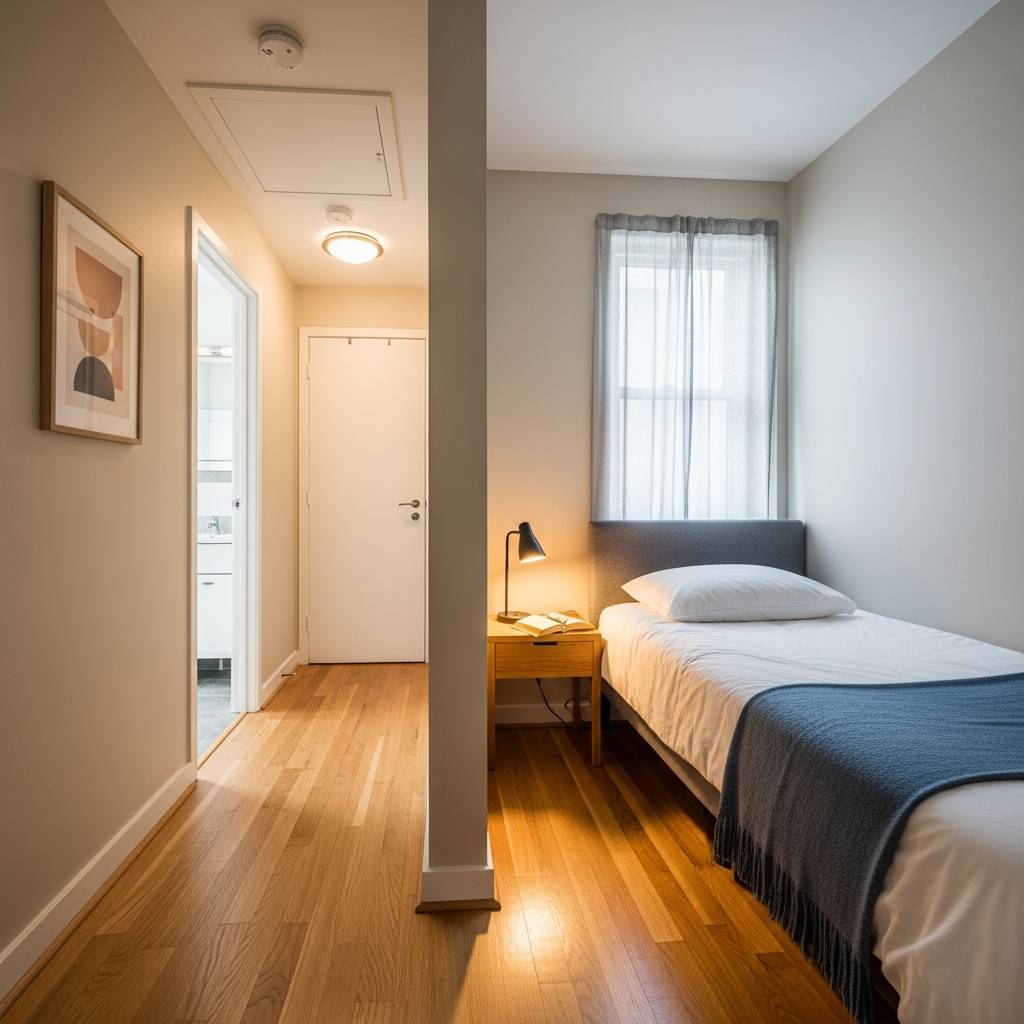
22. Install a Hidden Pull-out Desk
If you need a workspace but don’t have room for a desk, a pull-out or fold-down wall desk is the perfect solution. These units can be mounted to the wall and only take up space when you are actually using them. Once your work is done, you simply fold it back up, and your bedroom returns to its restful state. This flexibility is key to making a tiny space work for a modern lifestyle.
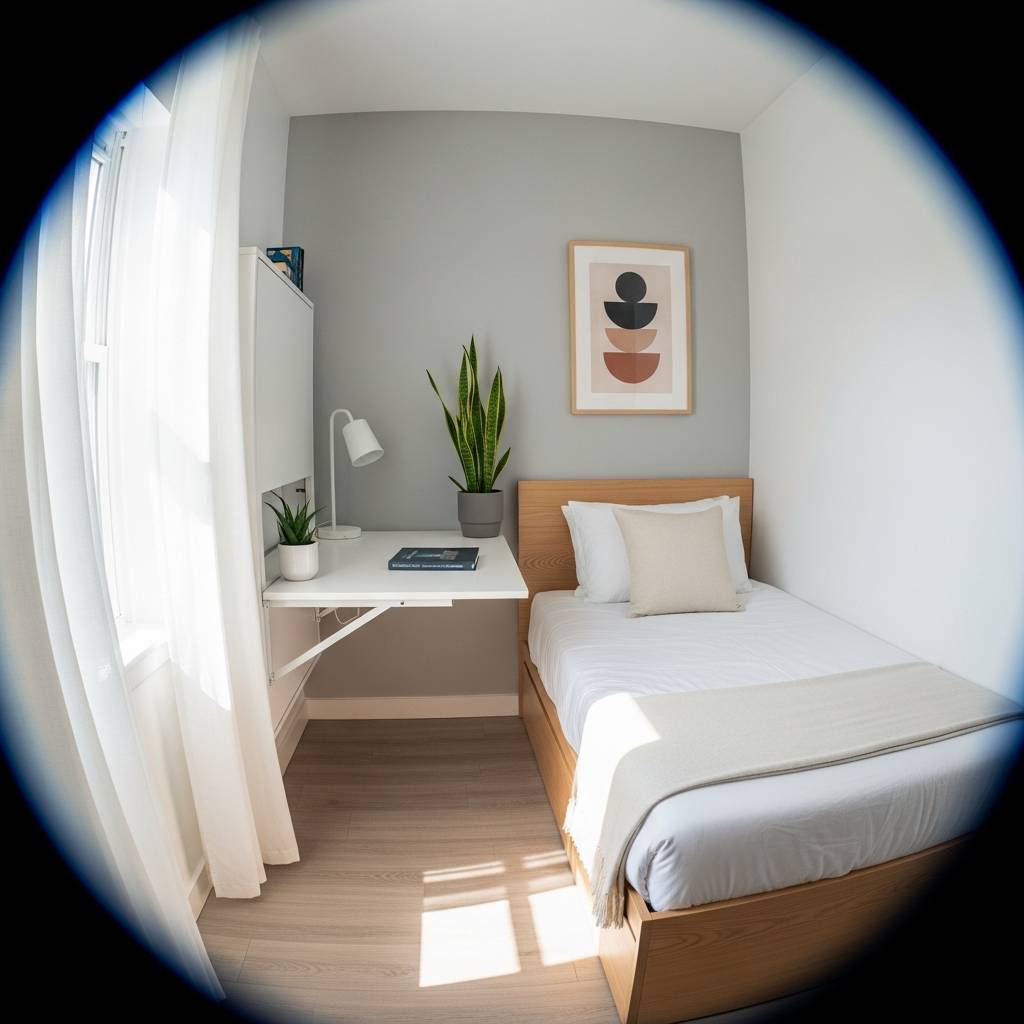
23. Strategic Lighting Layers
Don’t rely on just one overhead light, which can cast harsh shadows and make the corners of the room disappear. Instead, layer your lighting with a mix of overhead fixtures, wall sconces, and maybe a small floor lamp or LED strips behind the headboard. Having multiple light sources allows you to control the mood and ensures every corner of the room is illuminated, making the space feel larger and more inviting.
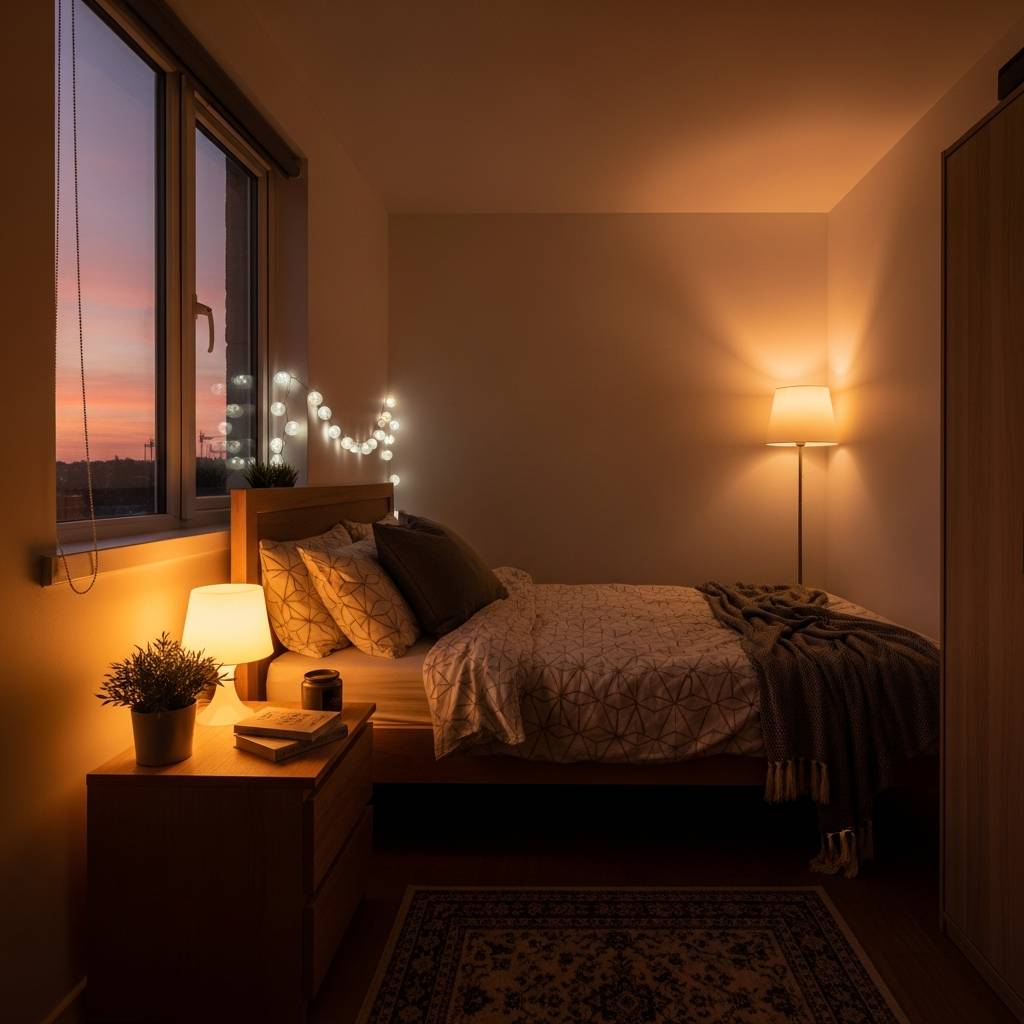
24. Window Sills as Extra Surface Space
If your tiny bedroom has deep window sills, use them to your advantage. A window sill can act as a secondary nightstand, a plant shelf, or a place to stack your favorite books. This utilizes existing architecture without adding new furniture. Keep it organized to ensure it looks like a design choice rather than a landing spot for clutter, adding a charming and functional layer to your small room.
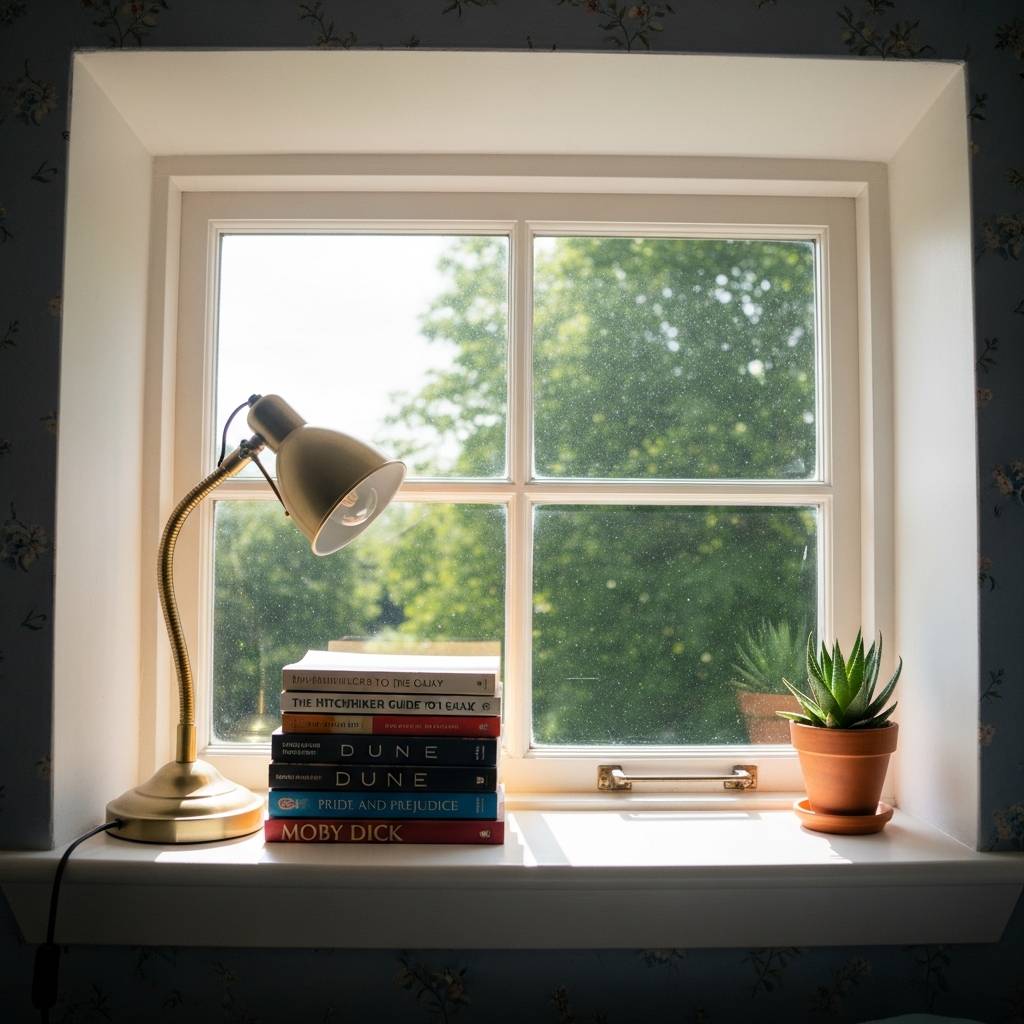
25. High-Gloss Finishes to Reflect Light
Just like mirrors, high-gloss finishes on furniture or even a semi-gloss paint on the ceiling can help reflect light around the room. A glossy white wardrobe or a lacquered side table will bounce light back into the space, contributing to a bright and expansive feeling. These subtle reflections trick the eye into perceiving more depth and height, making the room feel much larger than its physical dimensions.